Heckled on Jekyll Island Georgia
Fly fishing the Surf of Georgia
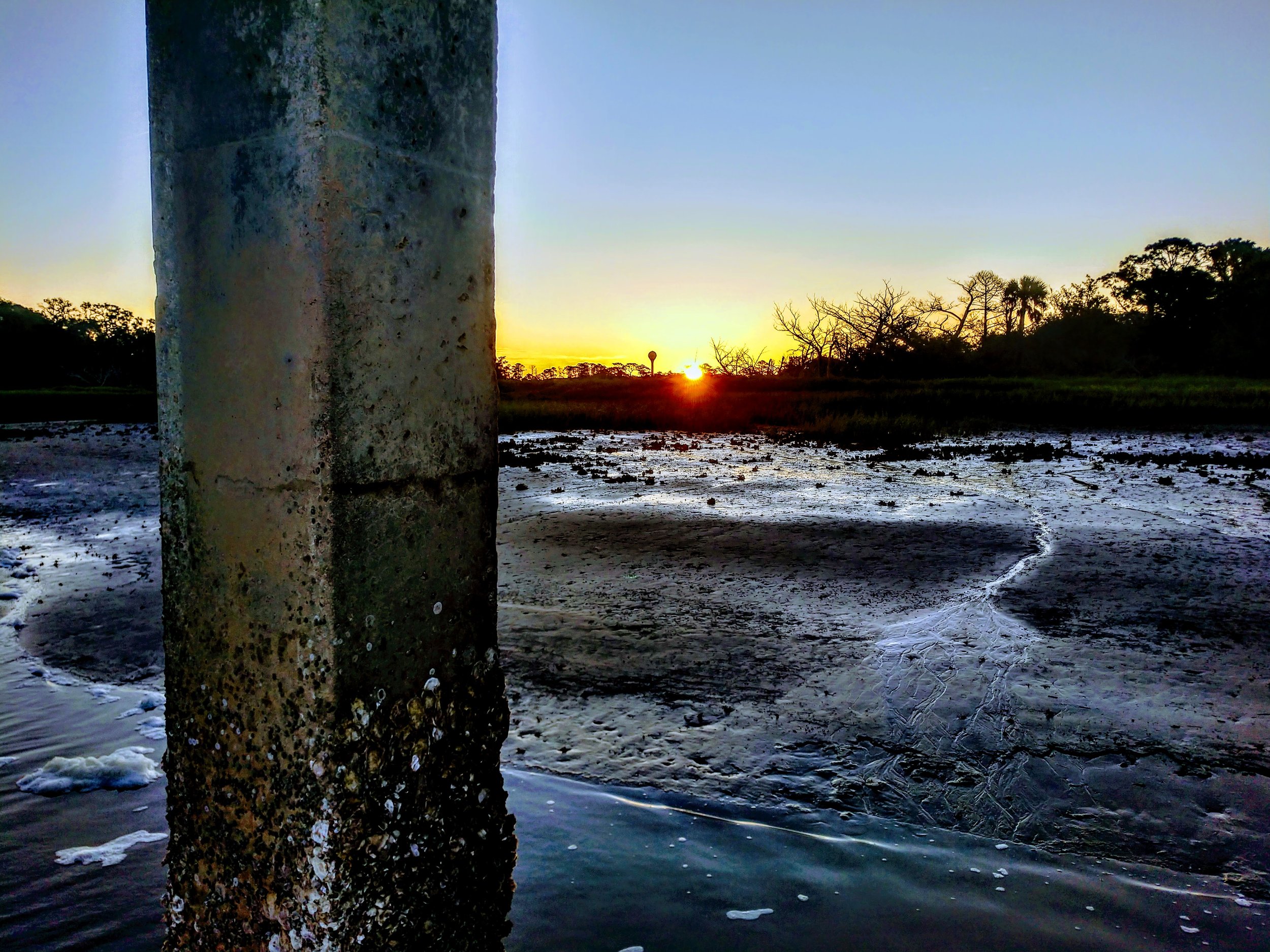
It was mid-April of 2020 when I had just begun my new lifestyle of being a vagabond, and at the same time, the world was virtually shut down due to the Covid-19 pandemic. My job situation changed while I was working in Tennessee during this period, and I was suddenly deemed an essential worker. In hindsight, this was a blessing in disguise. My work came in intense bursts of extreme physical labor followed by stretches of anywhere from three to ten days off in a row. I was deeply yearning to escape the dreary, overcast weather—to soak up some much-needed sunshine and fly fish along the surf and intertidal estuaries of the Southeast USA. So, after finishing work one day, I hit the road, heading down Interstate 24 toward Charleston, South Carolina.
When I arrived in Charleston, South Carolina, the scene eerily resembled something straight out of a Post-Rapture scenario—quiet streets and an almost surreal stillness. Needing to gather some local knowledge, I searched for fly shops in the area that would be open. That’s when I discovered Southern Drawl, located on Hilton Head Island. I had never fly fished in the surf or the intricate estuaries of the Low Country before, so I was eager to get some expert advice. The owner of Southern Drawl patiently explained that timing the tides correctly is absolutely critical for success in this kind of fishing. He mentioned that in just a few days, Hilton Head’s tides would be at their most optimal and strongly encouraged me to return then. In the meantime, he recommended heading south towards Savannah, Georgia, to Jekyll Island State Park, where I could try my luck with saltwater fly fishing. After picking up some essential saltwater fly fishing gear and a selection of hand-crafted flies from the shop, I was quickly back on the road, ready for the next leg of my adventure.
I had been on the road for a long and tiring day, spending countless hours behind the wheel, so I decided it was best to take a much-needed break and rest at a nearby truck stop. (Read more about my conclusions on the best places to sleep while traveling to a final destination spot.) The low rumble of the 18-wheeler engines passing by, combined with the roaring thunderstorms outside, made it quite challenging to fall asleep. It felt almost like the night before Christmas, filled with a blend of wonder, excitement, and anticipation crossing my mind. To help pass the time, I scrolled through numerous blogs about surf fishing along the southeast coast and discovered fascinating details about Jekyll Island. Then, I checked my WindyAPP for detailed, up-to-the-minute information on currents, tides, and weather conditions to better plan my early morning. I set the alarm to wake up early in order to catch the tides and hopefully experience the breathtaking sunrise. Just as I finally drifted off to sleep, the alarm rang sharply, signaling that it was time to get up and head off to Jekyll Island.

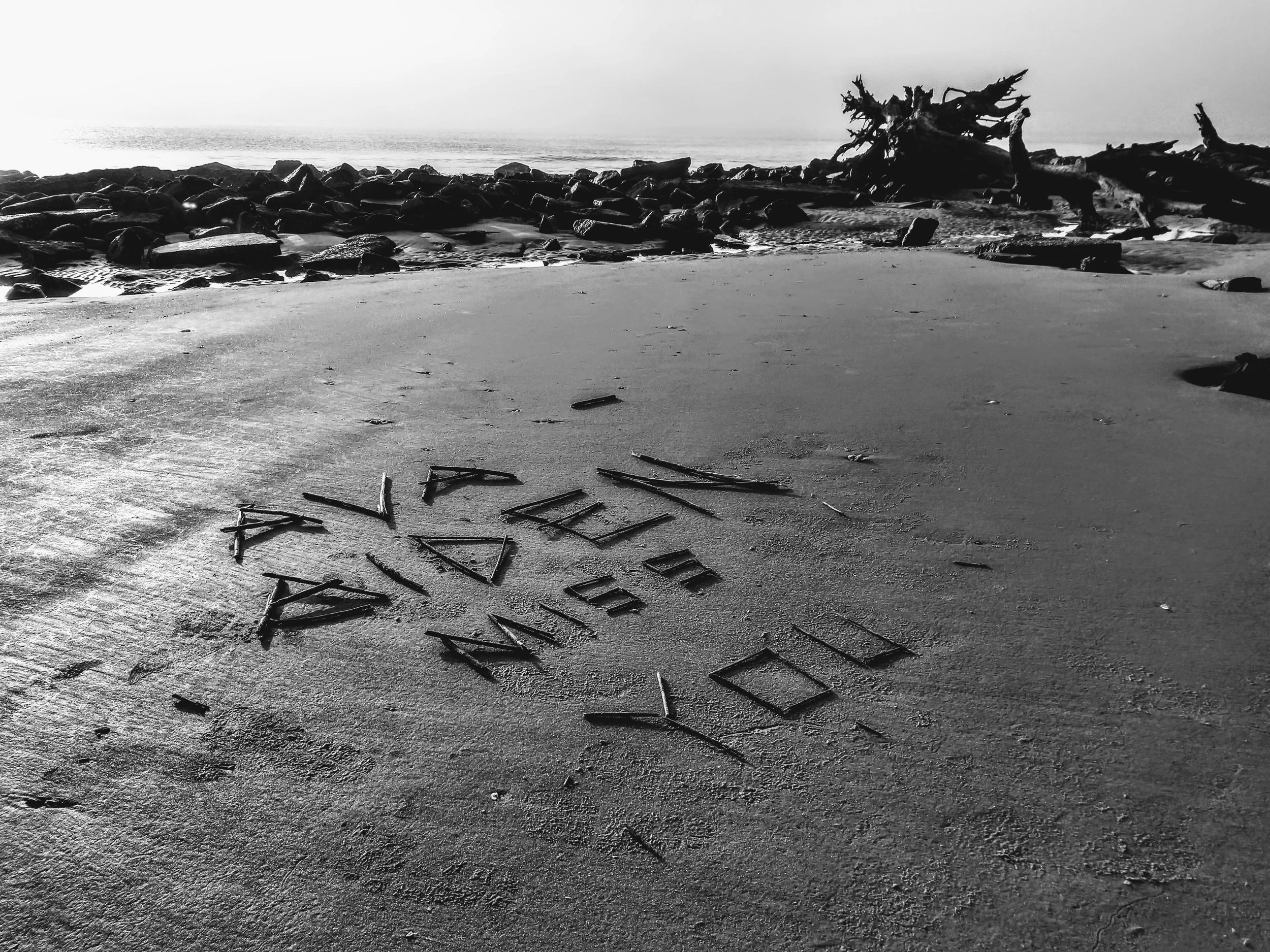
I arrived at Jekyll Island a few hours before sunrise, just in time to catch the breathtaking first light of the day. The familiar smell of the sea air filled my lungs, but unlike the crisp, cool breezes of the West Coast beaches I knew well, this one had a warm, almost heavy feeling to it. The entrance to the state park features a self-pay gate, where visitors can easily purchase passes for multiple days if they wish to stay longer. As I drove toward the park, I made a spontaneous decision to visit Driftwood Beach. I wanted to capture a few photos and create a little message for my kids using the scattered driftwood before the incoming tide washed it all away. Wearing my trusty flip flops and shorts, I began carefully gathering pieces of wood. Soon, I noticed tiny gnats moving in coordinated swarms. Before I realized what was happening, these little insects found fresh skin — my feet were soon covered by them. Though I couldn’t feel any bites at the moment, the moment I started walking, they dispersed, only to return when I paused for more photos. I had no idea then about the welts that would appear that very evening, resembling a rash that looked surprisingly like measles. The itching sensation was unbearable. Note to self: don’t wear flip-flops in the driftwood areas of beaches. After finishing the sunrise photos and my driftwood art, I headed to the main beach I had read about, eager to explore more of what the island had to offer.
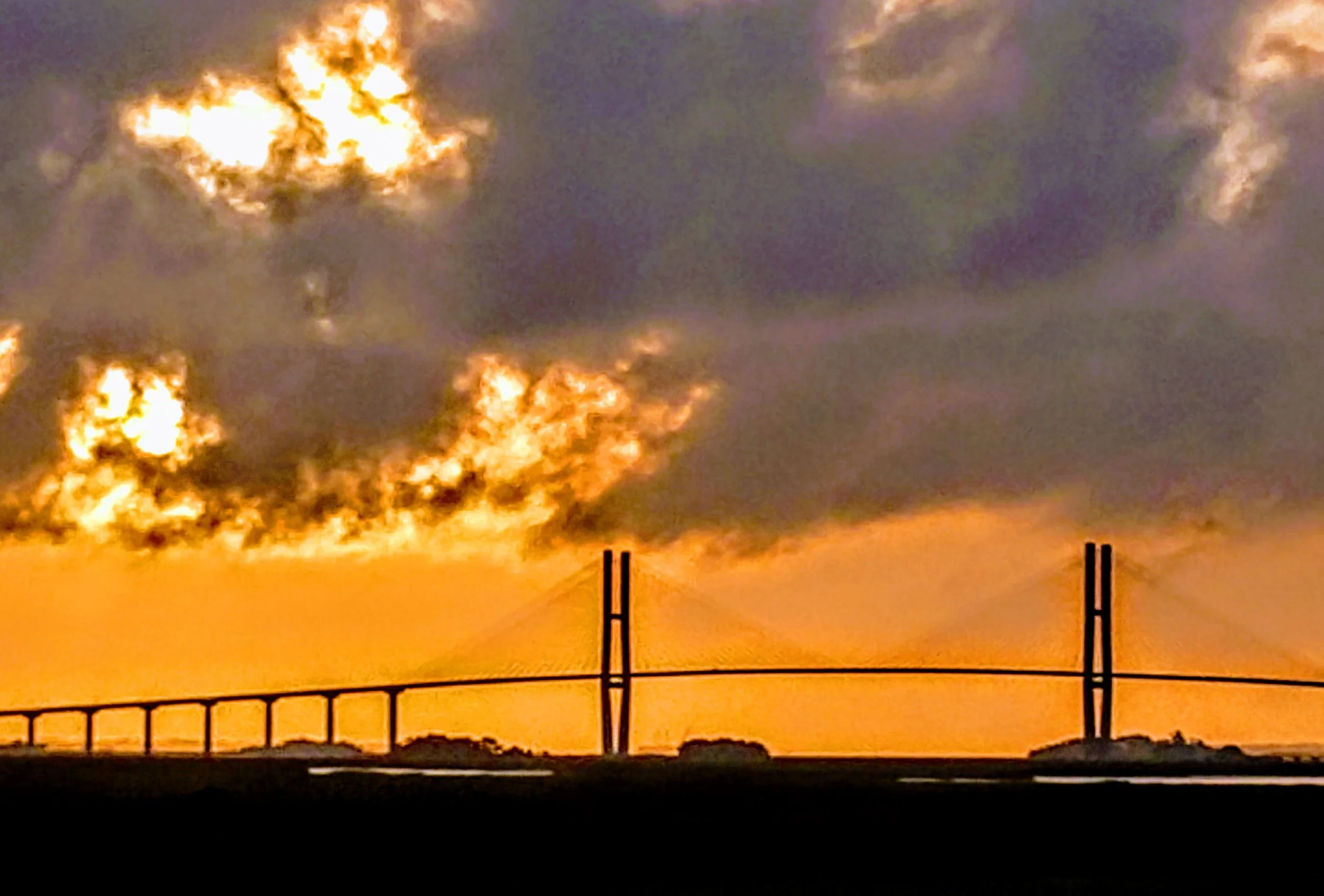
I scouted the area for several minutes, walking slowly up and down the sandy beach with careful attention to every small detail around me. I was searching keenly for signs of baitfish, hoping to find the perfect match for the variety of flies I had recently purchased and brought along specifically for this trip. After spotting a small school of baitfish being energetically chased by a lively group of mullet, I quickly tied on a clouser pattern that I thought would work best in those conditions. Then, it finally happened—my very first cast in the vast and endless Atlantic Ocean while fly fishing. The feeling that washed over me was a delicate blend of pure serenity and the deep satisfaction that comes with learning an entirely new and exciting way to fish. I soon found myself settling into the rhythm, mastering the English style of gathering the fly line in small, careful loops between my fingers as I stripped the fly smoothly and deliberately through the water. Despite occasionally snagging oyster beds and thick patches of sea grass, the Umpqua 16 lb test tippet held strong without fail, and the 9-weight rod my father had entrusted me with cast effortlessly, making the entire experience even more memorable and special. As the morning grew warmer, and the sand fleas became increasingly aggressive, I realized this was just the beginning of an unforgettable day filled with harassment, danger, and moments ripe for deep reflection.
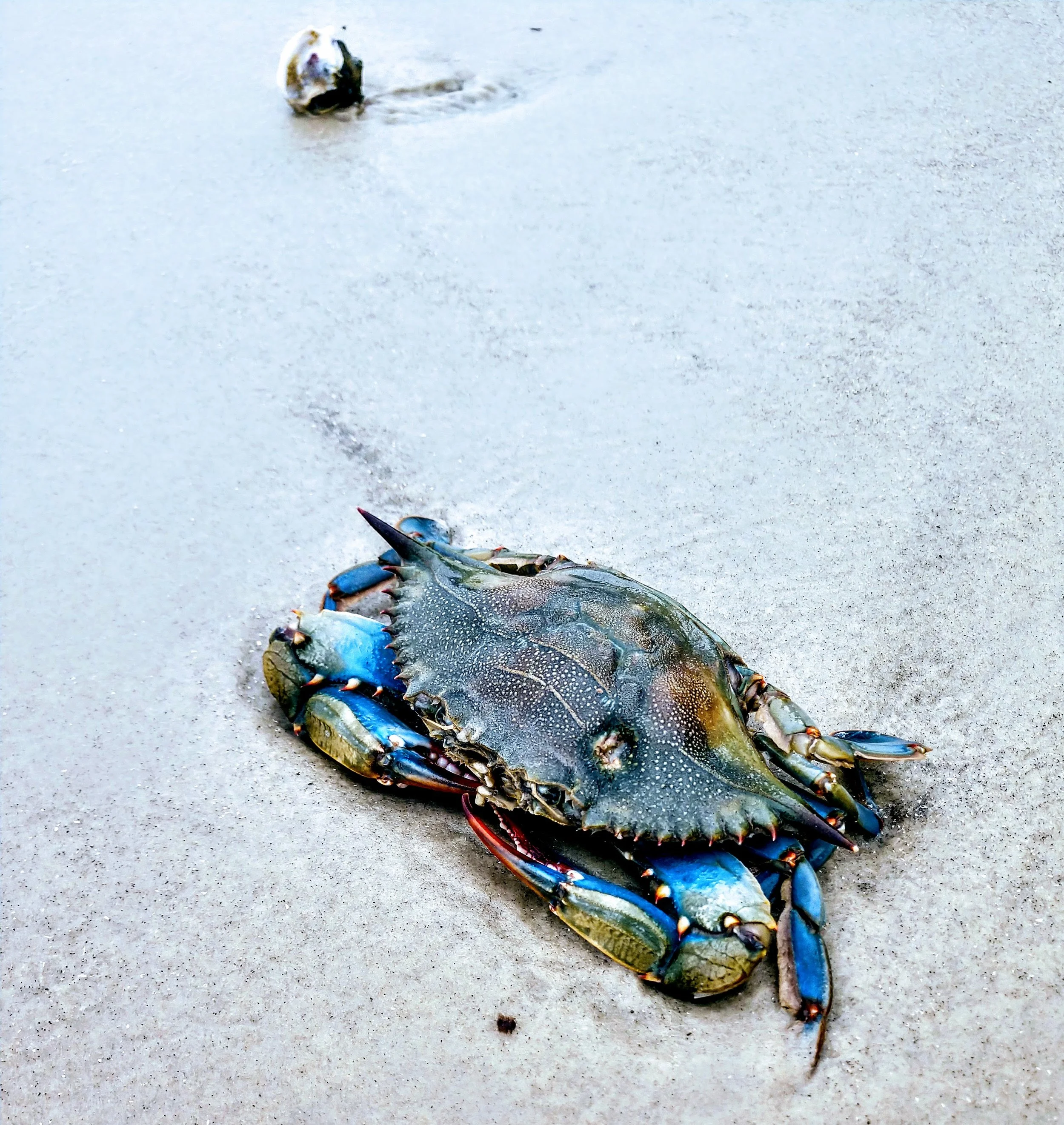
It was while I was carefully observing a blue point crab and thoughtfully selecting a fly to match its pattern that IT HAPPENED! As I had mentioned, this was the pinnacle of the Covid pandemic, a time when people were gripped by fear and emotions ran high on both ends of the spectrum. Additionally, there were those who simply didn’t like seeing people fishing from the beach. A group of women approached me, asking what I was doing there. With enthusiasm, I explained that it was my first time fly fishing in the surf, and also my first time fishing in Georgia. Well… that didn’t exactly go as planned. They began telling me that I was invading their space because I was casting in the path they wanted to walk. Then they went on to say that the fish in the area were full of poisons, and warned me that if I was wading in the water, I should know it too was contaminated. I calmly let them pass by, but I could overhear them talking about how they should report me for fishing dangerously.
A few moments later, a large family group was walking toward me. I stopped casting to let them by. Two of the men stopped and asked why I was there. Again, I explained pleasantly about my first fishing venture. This time, I was abruptly confronted and told, “It’s a pandemic—get out of here!” Not wanting to cause a confrontation, I simply packed up my rod. Still, it crossed my mind that I was alone, self-quarantined, and more than six feet away from anyone else. Why me? Weren’t they supposed to maintain social distancing and not approach others? Regardless, I decided to set fishing aside for the moment and instead explore the trails and historical signs on the island, hoping for a quieter, more peaceful experience.
The trail and the self-guided tour genuinely made me sincerely reflect on the immense struggles and hardships that people endured throughout history. Being from the West Coast, I had learned about the slave trades in history classes, but I had never truly seen or experienced the physical history up close. My mood grew increasingly melancholic as I absorbed the weight of it all. While reading excerpts and observing replicas of the harsh living conditions people had to endure, I felt a deep sense of sorrow. As I somberly walked back to the parking area, I noticed a vehicle parked very closely next to my truck, adding a subtle tension to the moment.
Apparently, one of the two groups had managed to find an official nearby to address the situation. The officer told me that I could not be on the beach fishing (though I had already checked the Regulations carefully and confirmed that I could indeed fish there), which understandably caused some upset and confusion among the people present. Since I had already paid for a full day at the state park, I politely asked him if there was anywhere within the park boundaries where fishing would be allowed without conflict. He kindly pointed out an estuary nearby where I wouldn’t be bothered, as well as the boat launch area that could be used for fishing. As I drove toward the man-made estuary, which had once been a popular swimming area for visitors, I noticed an ominous sign warning all visitors that alligators might be present in the water and urged everyone to exercise extreme caution while nearby.
I decided to fish from the piers that jut out into the estuary, figuring I would at least have a fighting chance of an alligator encounter. Tying on another Clouser, I cast the fly about 45 feet toward the edge of the pier, thinking that’s exactly where the fish would be hiding. A few casts later and Wham! A fish was on. Setting the hook firmly, I fought the fish for a minute or so. As I got the fish close, within the length of the leader, I could see that it was a Speckled Trout. Reaching with my net to land the fish, the most terrifying thing happened—an alligator suddenly emerged from under the pier and snatched the fish right out of the water. My heart raced with adrenaline, and I paused, stunned. Did that really just happen? I quickly moved to another spot about 30 yards away, hoping for better luck. Surprisingly, the same thing happened again, even though this time I was casting into open water. These gators must have learned this trick over the years. Unfortunately, this was all before I had an action camera or I would have surely gone viral.
I then made my way to the boat launching area, but the tide was against me and boats were actively being loaded back onto trailers. Given the situation, I decided to hang it up for the night. I headed into the village to grab some food and check out a few local shops. After a phenomenal meal at a nearby restaurant and some window shopping—though many places were closed due to the coronavirus pandemic—it was time for me to get some much-needed rest. I was planning to head to Hilton Head in the morning to catch the late morning tide, and besides, I wanted to get some more advice from Southern Drawl Fly Shop before I left.
So, did I catch a saltwater fish on a fly in the surf? The answer is somewhat murky. Yes, I did hook up with saltwater species, but no, I wasn’t able to land them due to those unexpected predators, and technically no, because it wasn’t in the ocean proper. Next time I’m in the Savannah, Georgia area, I’d definitely like to explore and fly fish around Jekyll Island again.
Thank you for taking the time to read my blog about Jekyll Island State Park Georgia To complement the article, I have also included an accompanying YouTube video for you to enjoy.
youtube Link
Link Amazon
Affiliate Disclaimer
Vagabond Outdoorsman may receive compensation for purchases made through links on this site. This comes at no additional cost to you and helps support the maintenance and content creation of Vagabond Outdoorsman. We only recommend products and services that we believe will add value to our readers. Please understand that any opinions expressed are our own and based on personal experience or reliable research. Your trust is important to us.